Has black badging lost its meaning?
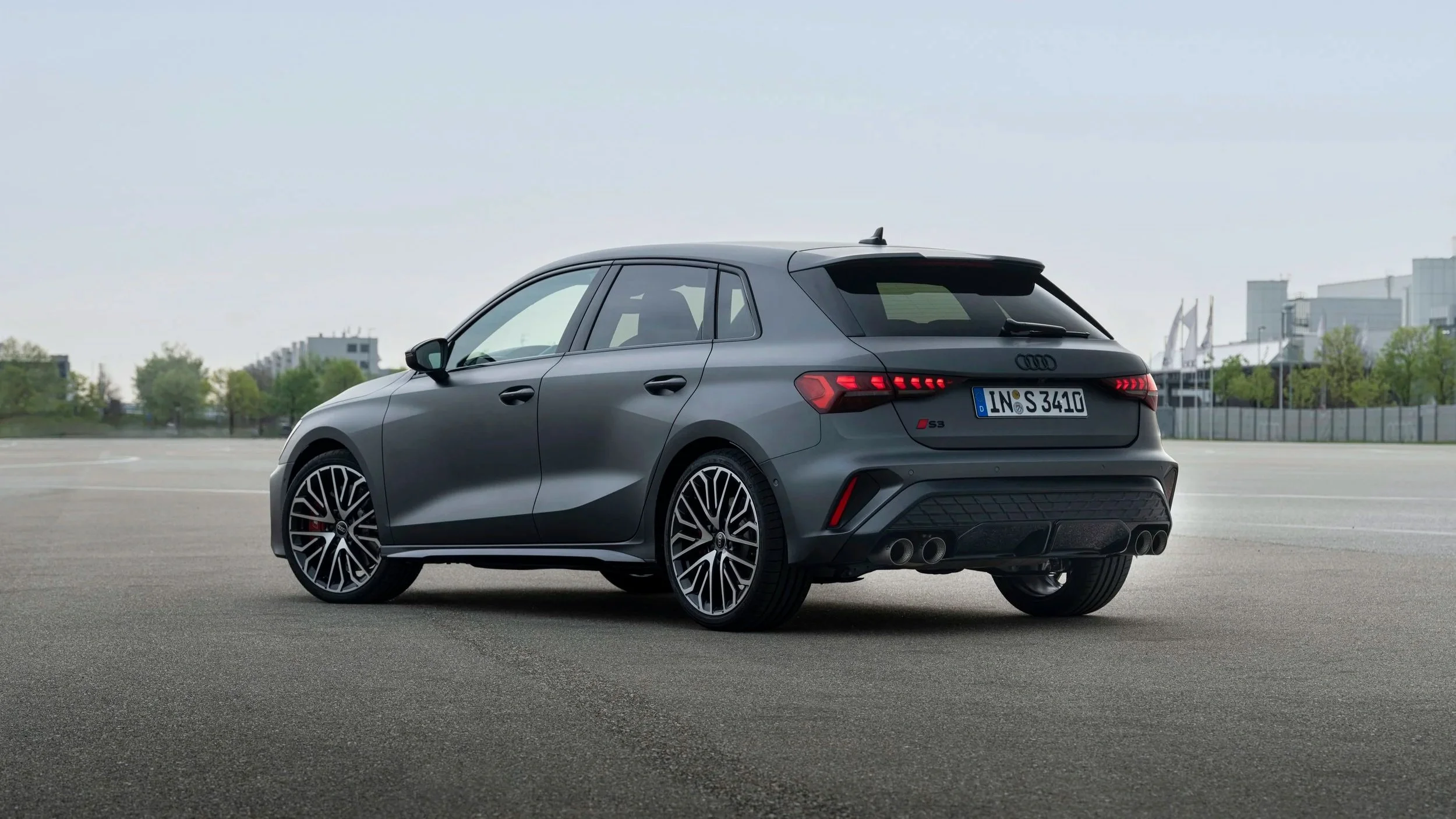
There was a time when black badging actually meant something.
You’d see a blacked-out grille or darkened emblem on a performance model or a high-end special edition and it felt aggressive but subtle. Slightly rebellious. The automotive equivalent of someone turning up to a formal event in an all-black suit while everyone else wore navy.
Now?
You can barely leave a supermarket car park without spotting a blacked-out badge on something.
And increasingly, the trend feels less like a design decision and more like a default setting.
The rise of the stealth aesthetic
To be fair, black badging didn’t begin as a tacky aftermarket trend.
Manufacturers themselves pushed it hard.
Rolls-Royce introduced its Black Badge models as darker, more driver-focused interpretations of its cars.
Audi leaned heavily into Black Edition trims.
Land Rover embraced stealth styling packs across the Range Rover lineup.
At its best, the look worked because it created contrast through restraint.
Chrome says “look at me.”
Black trim says “I know you already are.”
That subtlety was the appeal.
The problem is that once a design cue becomes popular enough, it stops being a signal and starts becoming decoration.
And that’s exactly what happened here.
When every car started trying to look aggressive
Like most automotive styling trends, black badging eventually escaped the premium market and became accessible to everyone.
Suddenly, entire industries appeared around vinyl overlays, aftermarket badge replacements, gloss black trim kits, smoked lights, and blackout packs for virtually anything with wheels.
And while some factory black styling packages are genuinely well executed, the DIY approach often exposes the weakness of the trend.
Because black badging only really works when the rest of the car supports it.
A carefully designed performance car with dark detailing can look cohesive.
A standard-spec hatchback with black badges and nothing else changed often just looks… confused.
The visual language no longer matches the car itself.
The problem with removing contrast
One of the strange things about black badging is that it often makes design details less effective.
Badges exist for a reason. Designers use them as visual anchors. Chrome trim and metallic finishes create contrast against paintwork, helping break up surfaces and define shapes.
Black everything removes that contrast.
On some cars, the badge almost disappears entirely.
That might sound desirable in theory. Minimalism and subtlety are attractive ideas. But good design still relies on balance and visibility. Remove too much definition and you don’t necessarily end up with something cleaner. You just end up with less visual character.
Ironically, a trend originally associated with confidence has become increasingly performative.
Especially when applied to cars that are trying very hard to look more expensive, aggressive or exclusive than they really are.
The luxury industry may eventually move on first
This is usually how trends die.
Not suddenly. Quietly.
The moment something becomes too common, genuinely premium brands start searching for the next visual language that feels distinctive again.
We’re arguably already seeing hints of that shift.
Some newer luxury designs are becoming more restrained rather than more aggressive. Cleaner surfaces. Simpler detailing. Less visual noise. In some cases, even carefully reintroduced metallic finishes.
Others, including Audi, are moving from black badges to illuminated logos. See my video on Audi’s shift in design language for more on this.
Because true confidence in design rarely needs to shout.
And that may ultimately be what dates the black badge era.
So, will the black badge trend die out?
Probably not completely.
Car culture moves in cycles, and black styling will almost certainly remain popular in some form. There will always be cars that genuinely suit the look.
But the trend has undeniably lost some of its original impact.
What once felt understated now often feels expected.
And when everyone is trying to look stealthy, stealth stops being interesting.
The next status symbol in automotive design might not be blacking everything out.
It might simply be having the confidence to leave the chrome alone.